You are currently viewing Robotics Application of the Year Awards 2026 – From Technology to Pharmaceutical Application

Robotics Application of the Year Awards 2026 – From Technology to Pharmaceutical Application
Six award-winning applications show how robotics and artificial intelligence are advancing in automating laboratory operations, manufacturing, logistics and MedTech.

The RAYA Award 2026 winners combine technological innovation with concrete requirements from pharmaceutical practice.

Robotics in the pharmaceutical industry is progressing from isolated machines with narrowly defined tasks toward flexible, connected and increasingly intelligent systems. The Robotics Applications of the Year Award, or RAYA Award, is an initiative of the ISPE DACH Affiliate that recognizes innovative uses of robotics in pharmaceutical laboratories and manufacturing facilities. The initiative provides a platform for presenting practical applications, exchanging experience and accelerating the adoption of robotics across the pharmaceutical industry.

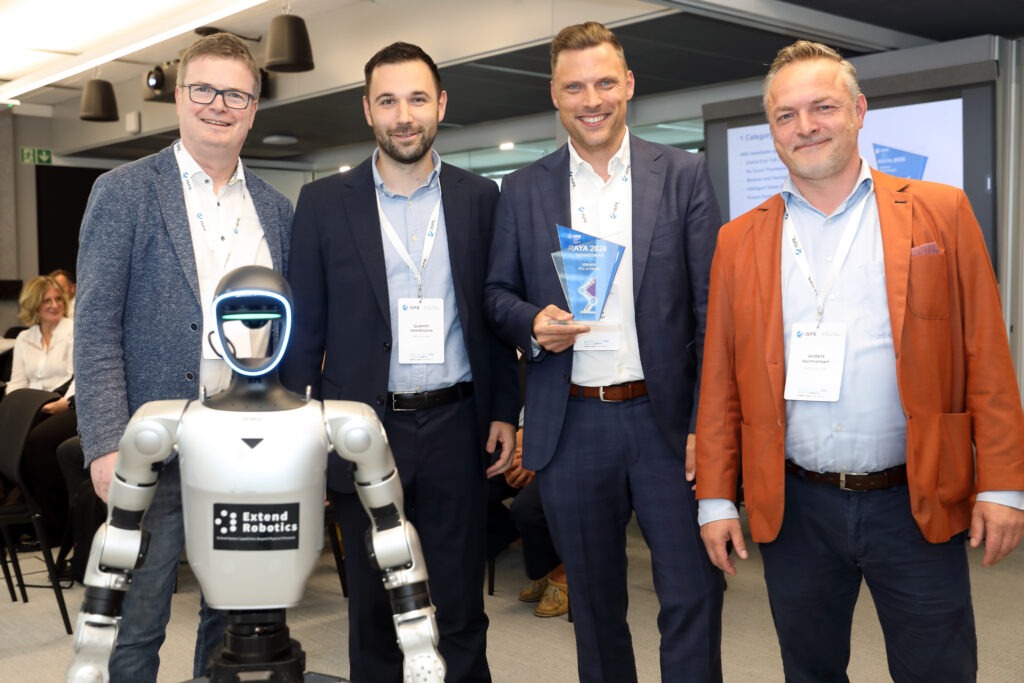
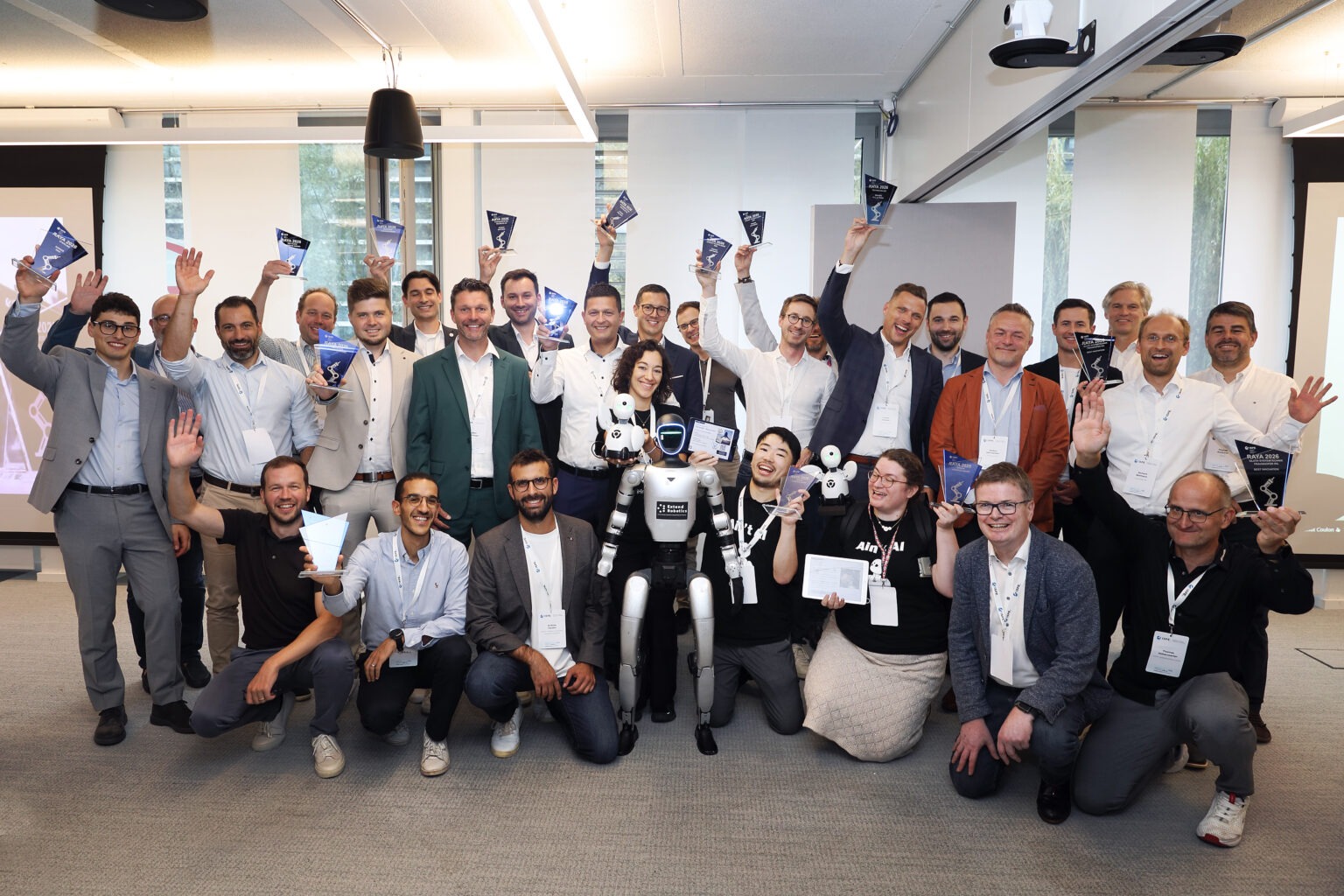
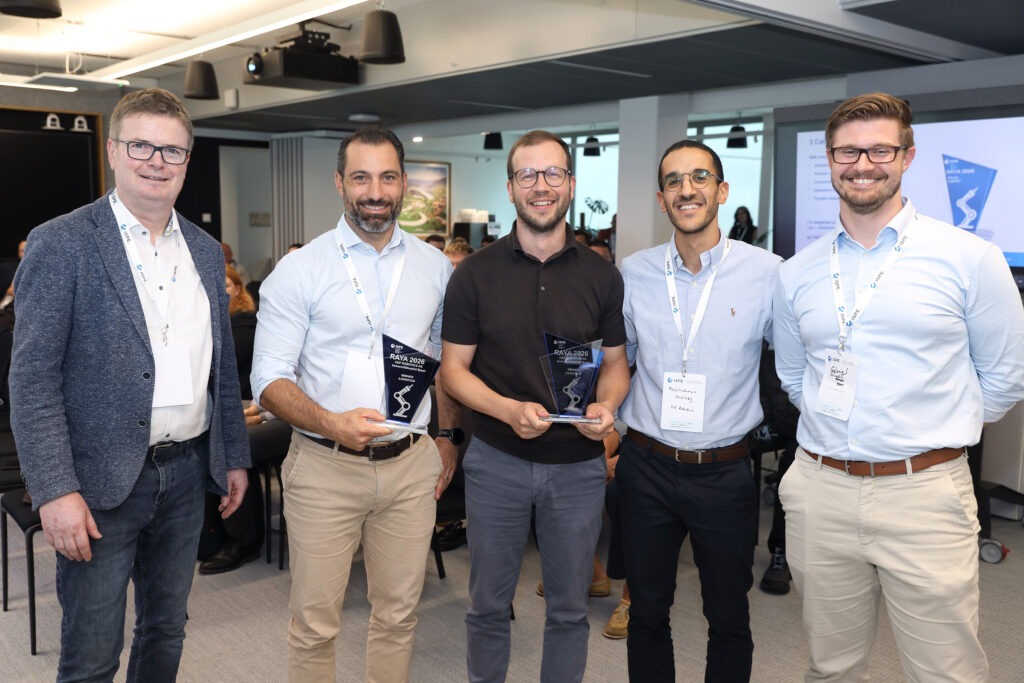
At the RAYA Award 2026 event hosted by Takeda in Zürich, 18 teams presented applications covering laboratory automation, logistics, Fill & Finish, MedTech, aseptic compounding and artificial intelligence. Six applications received awards in their respective categories. A separate audience vote also recognized the three applications that resonated most strongly with participants.

Connecting automated processes

Many laboratories already use highly automated analytical instruments. However, the movement of samples between equipment, storage areas and workstations often remains manual.

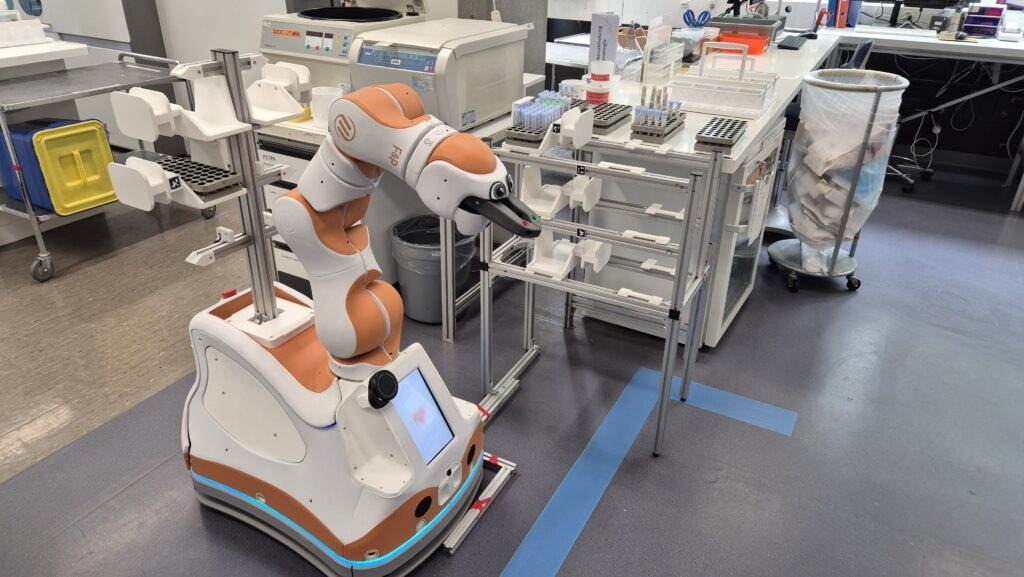
The Logistics Award went to Lio: Autonomous Sample Logistics in the Clinical Laboratory, developed by F&P Robotics in collaboration with University Hospital Basel.

The mobile manipulator combines autonomous navigation with robotic handling, allowing samples to be collected, transported and delivered within an existing laboratory without fixed tracks or major structural modifications.

The application reported 11,405 deliveries over 335 days of routine clinical operation, with 99.95% delivery reliability. Lio demonstrates how mobile robotics can become a flexible link between existing automation islands.

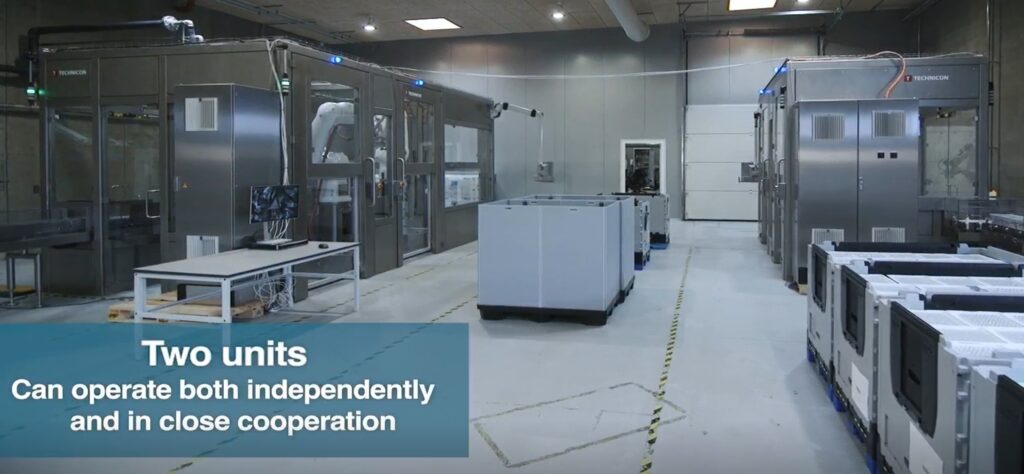
The Fill & Finish Award winner addressed a similar gap around production equipment. The Technicon TUB Infeed & Outfeed Robotic Solution developed by Technicon A/S automates depalletizing, box opening, TUB transfer, outfeed handling and palletizing before and after filling or inspection.

Empty transport boxes are also automatically collected and stacked for recycling. One implemented solution reported a payback period below two years and an OEE increase of up to ten percent.

The application shows that the performance of the core production line also depends on the reliability of the material flow surrounding it.

Flexibility with traceability

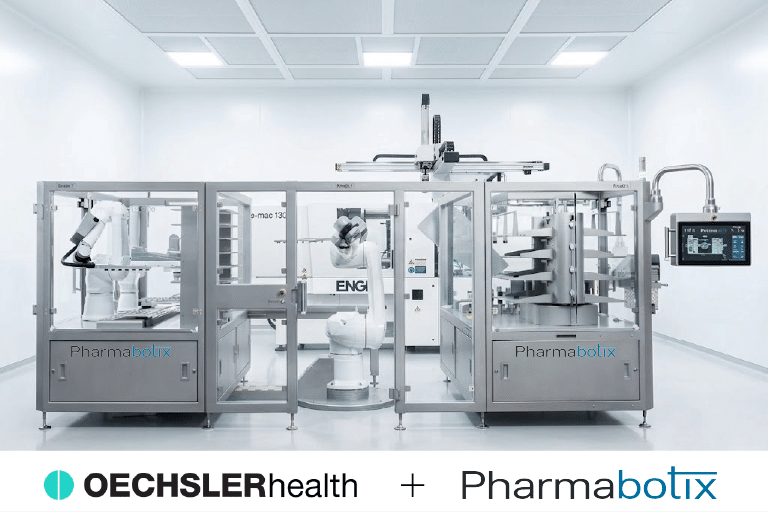
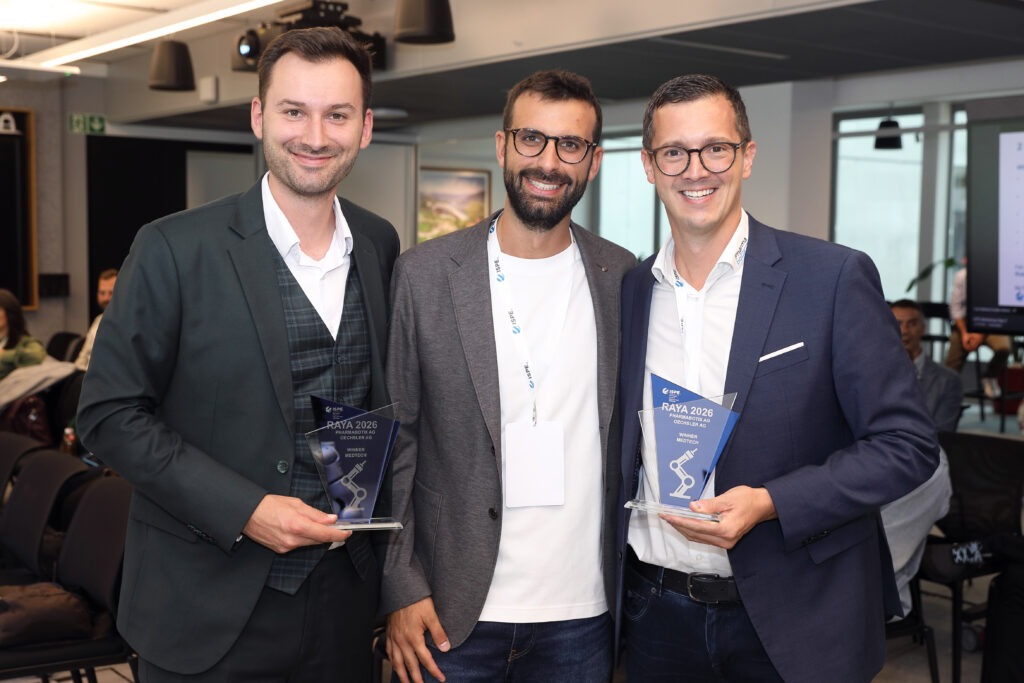
The MedTech Award went to the Robotized Packaging Solution for Continuous Glucose Monitoring Sensor Components, developed by Pharmabotix AG for OECHSLER.

The solution connects an eight-cavity injection-moulding process with robotic downstream handling and packaging. Every component remains linked to its originating mould cavity. If one cavity produces an out-of-specification component, the affected parts can be rejected while production continues with the remaining verified cavities.

This cavity-specific traceability connects production speed, physical material flow and quality information within one automated process.

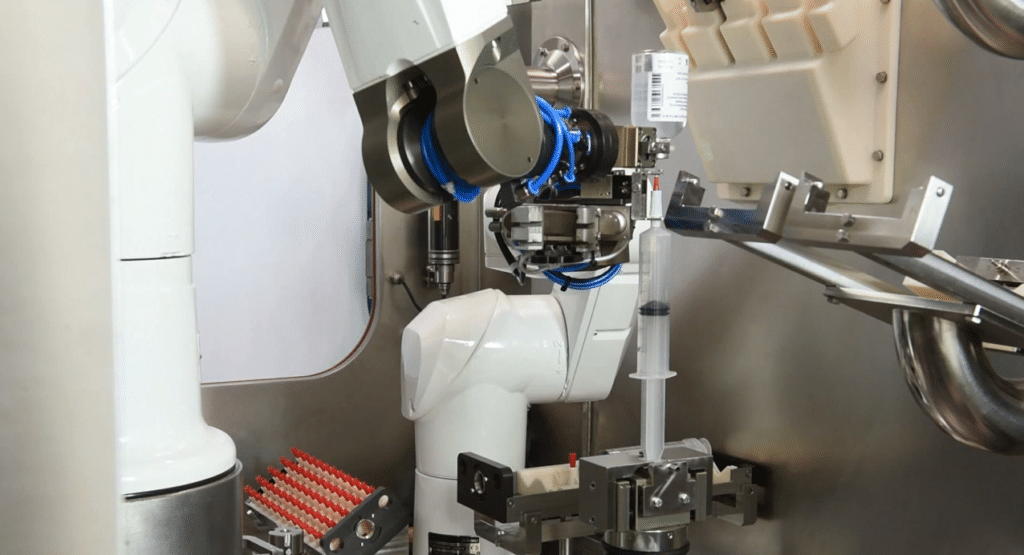
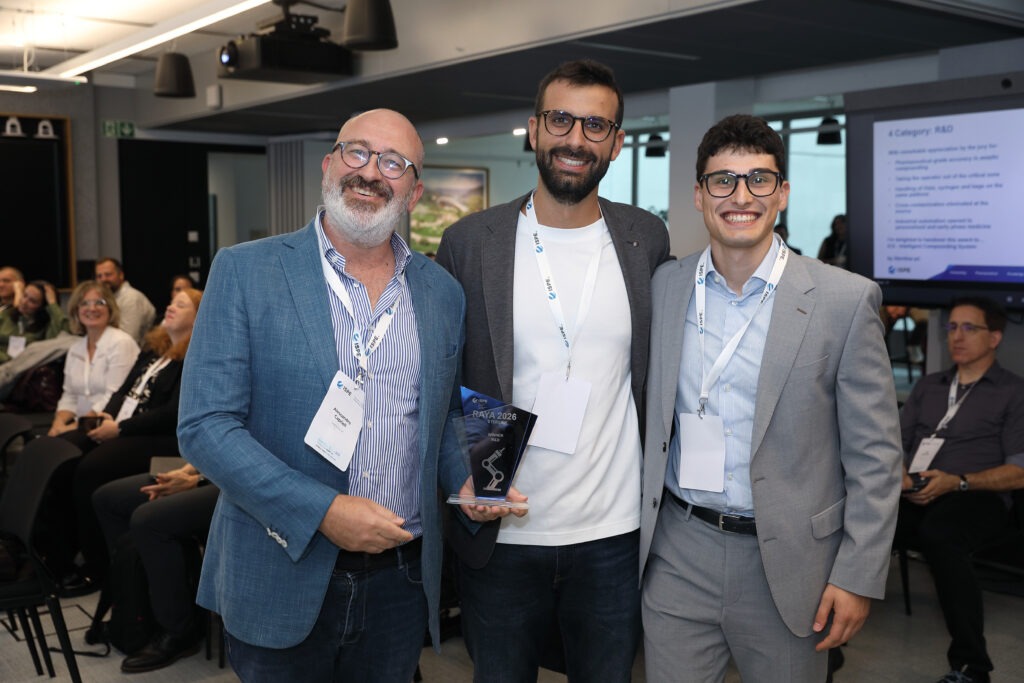
Flexibility was also central to the R&D Laboratories Award winner. The ICS Intelligent Compounding System from Steriline uses two cooperating robots inside an isolator to prepare complex, low-volume and high-risk products.

The system works with vials, syringes and bags and supports production from 50 preparations down to a batch of one.

RFID identification, dosing checks and electronic batch records provide traceability, while the isolator protects operators when handling cytotoxic, highly potent or biologically active compounds.

These applications show that future automation must provide more than speed. It must remain adaptable while maintaining process control and product traceability.

When AI enters the physical process

Two award-winning applications explored how artificial intelligence can contribute directly to robotic execution and experimentation.

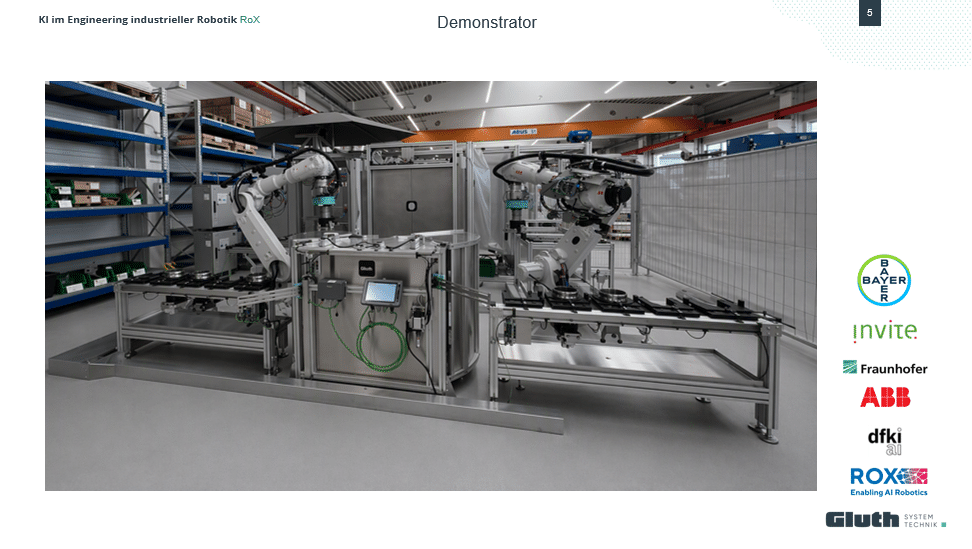
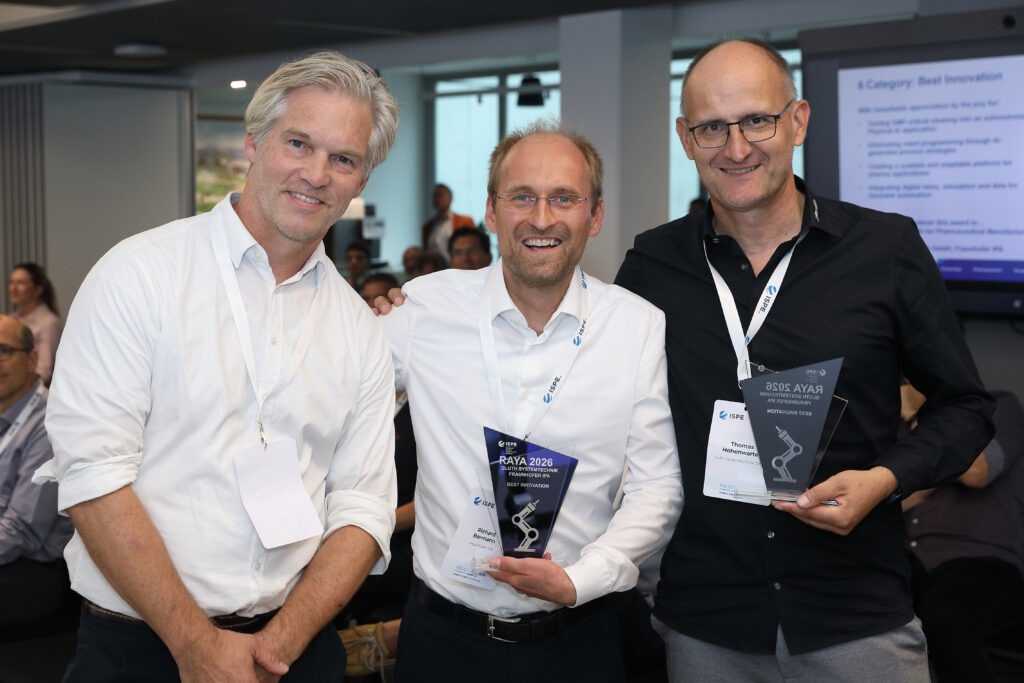
The Best Innovative Concept Award went to RoX: Robotics and AI for Pharmaceutical Manufacturing, presented by Gluth Systemtechnik GmbH in collaboration with Fraunhofer IPA.

The application addresses the automated cleaning of product-contact format parts. More than 6,000 change parts were analysed and consolidated into approximately 800 representative types. Object recognition, digital twins and physics-based simulation are used to derive gripping positions, suitable tools, handling strategies and cleaning trajectories.

The first demonstrator has been commissioned, and three representative format parts can currently be cleaned automatically. Pharmaceutical qualification remains part of a later industrialization stage.

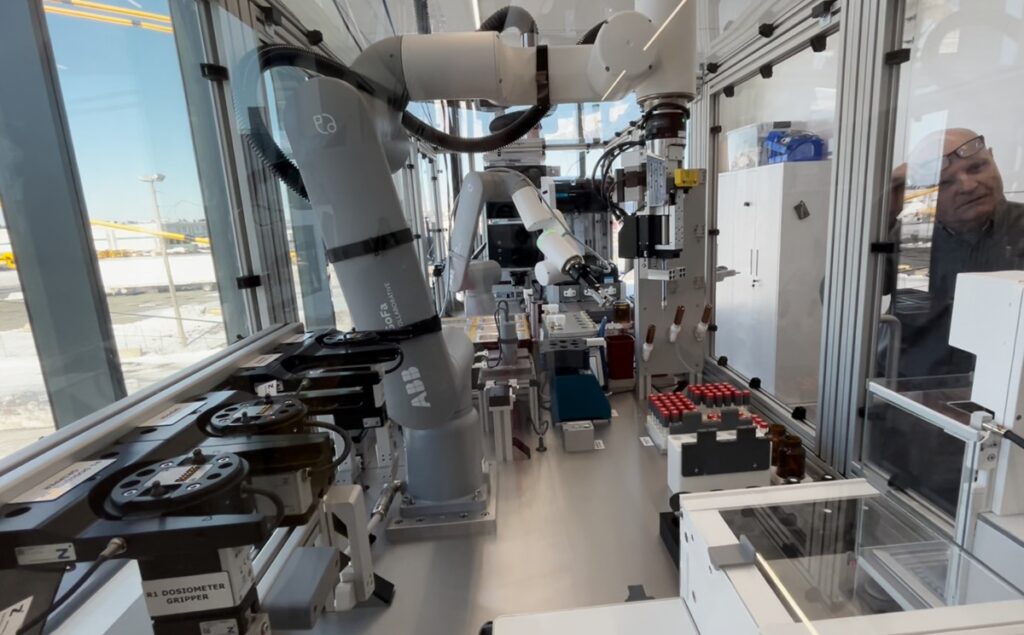
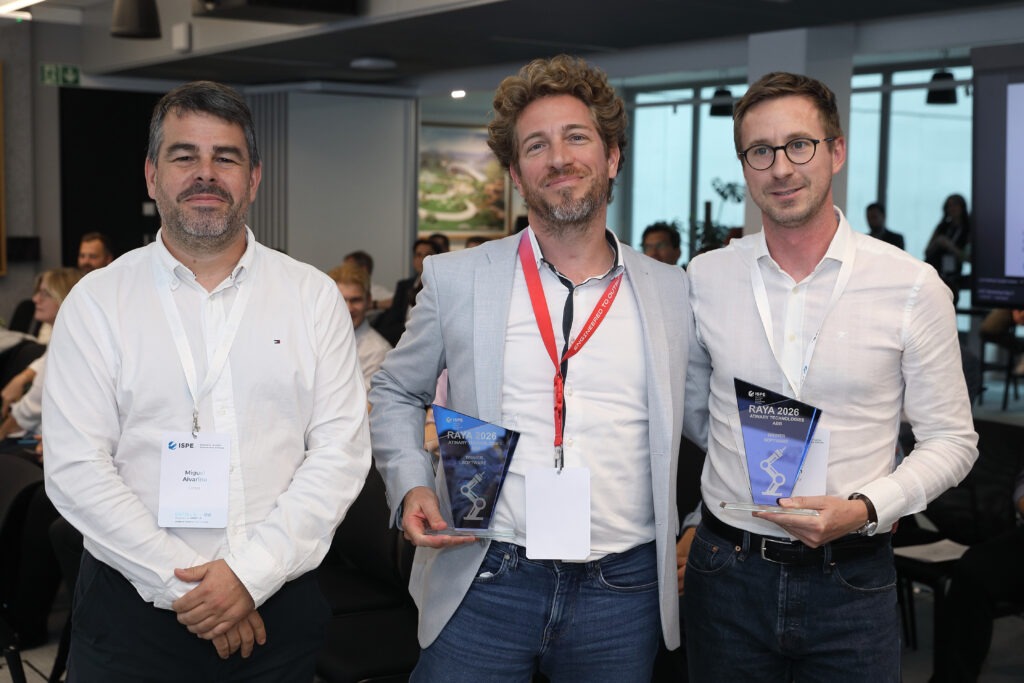
The Software and Artificial Intelligence Award went to the Autonomous Data Factory, presented by Atinary in collaboration with ABB Robotics.

The system creates a closed loop between digital decision-making and physical experimentation. AI selects experimental conditions, robots execute the experiments, analytical systems measure the results, and the generated data determines the next experimental cycle.

The application reported an optimization improvement of more than 50 percent.

In both applications, AI moves beyond retrospective data analysis. It becomes part of planning and executing physical processes.

The audience award highlights inclusion and adaptability

In addition to the six category awards, event participants selected their three preferred applications through the RAYA Award audience vote.

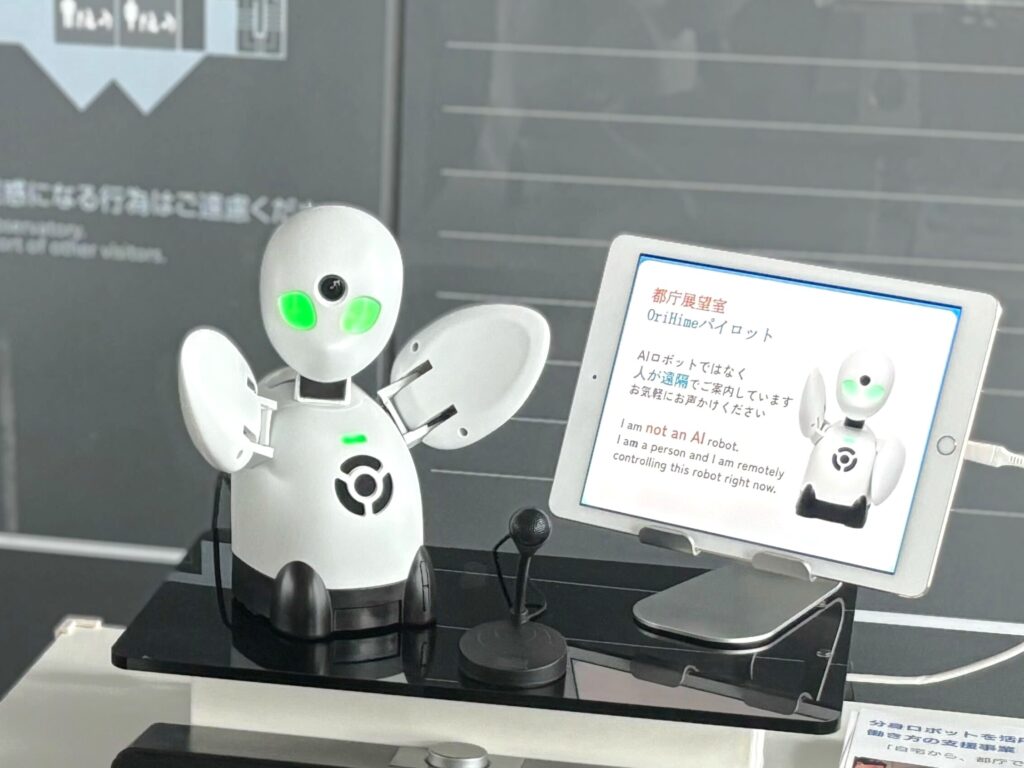
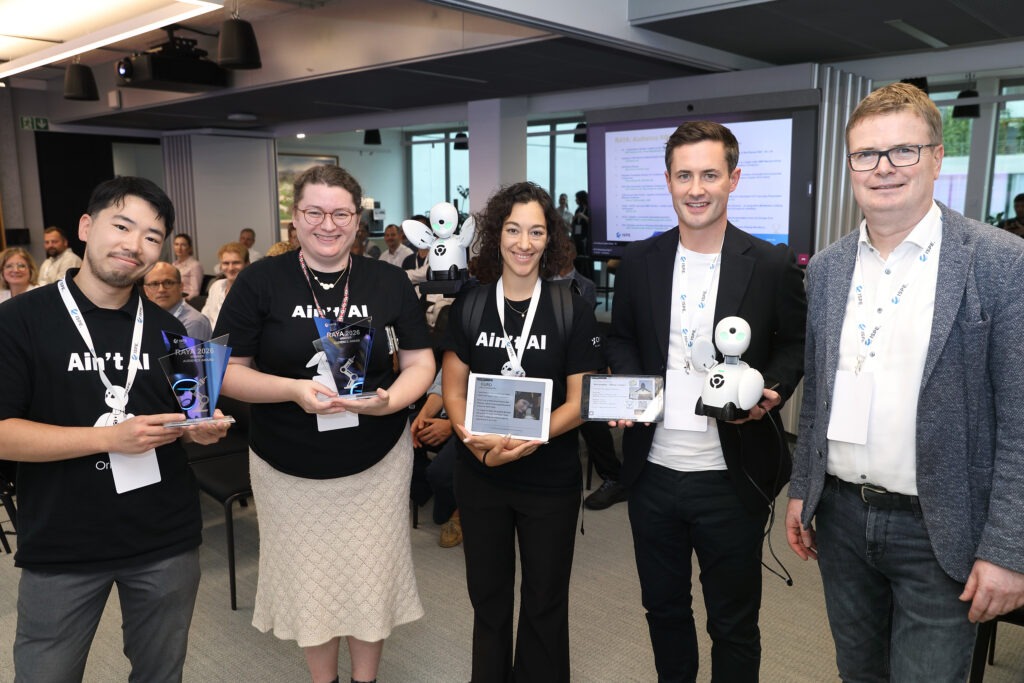
First place went to Robotics-Enabled Inclusion for the Future Pharma Workforce from OryLab Inc. and Takeda.

The remotely operated OriHime avatar robot enables people to interact with a physical environment from another location. Potential pharmaceutical applications include patient participation, remote expert involvement, training and laboratory observation.

The concept demonstrates that the value of robotics is not always measured through speed or throughput. It can also be measured through participation and inclusion.

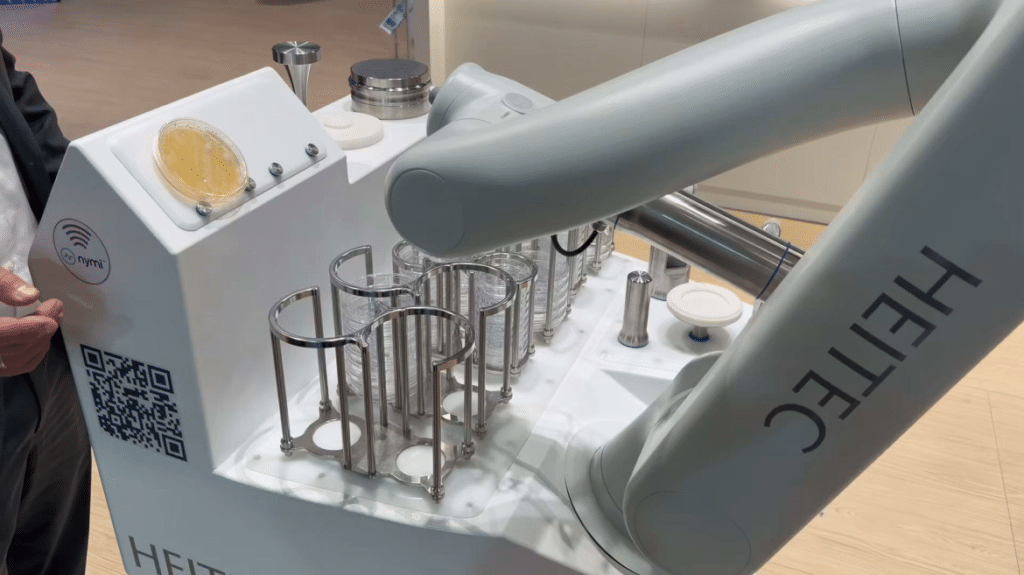
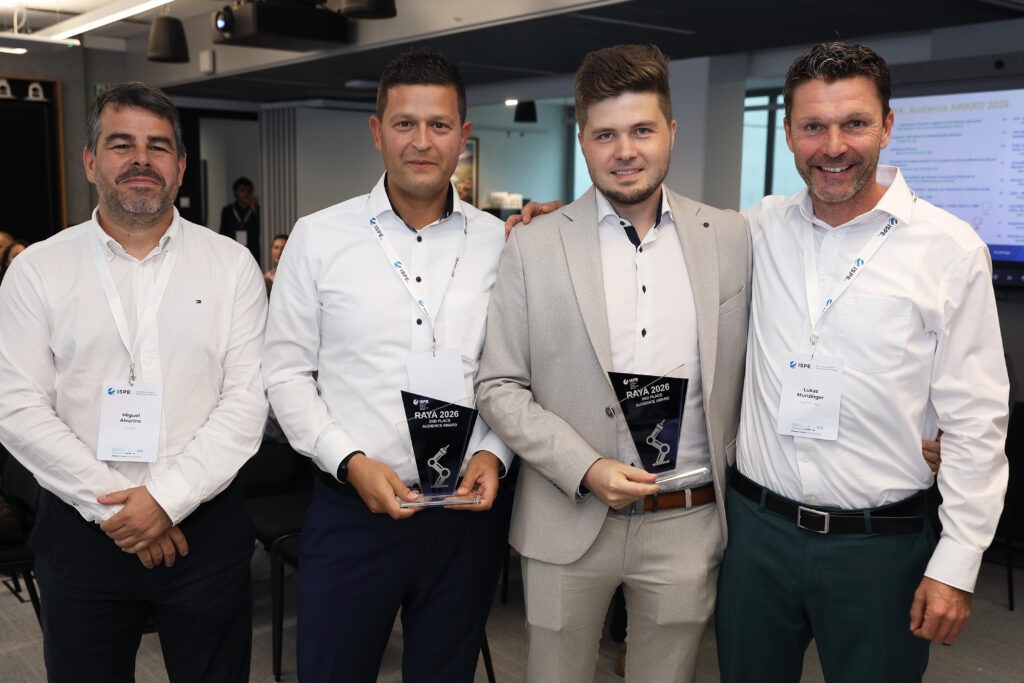
Second place was awarded to H.U.G.S. – HEITEC Universal GMP Solution from HEITEC AG.

The concept is based on a modular, cleanroom-capable mobile platform for environmental monitoring, material handling, transport and further GMP applications

Rather than developing a separate robotic solution for each task, multiple applications can build on a common technical foundation.

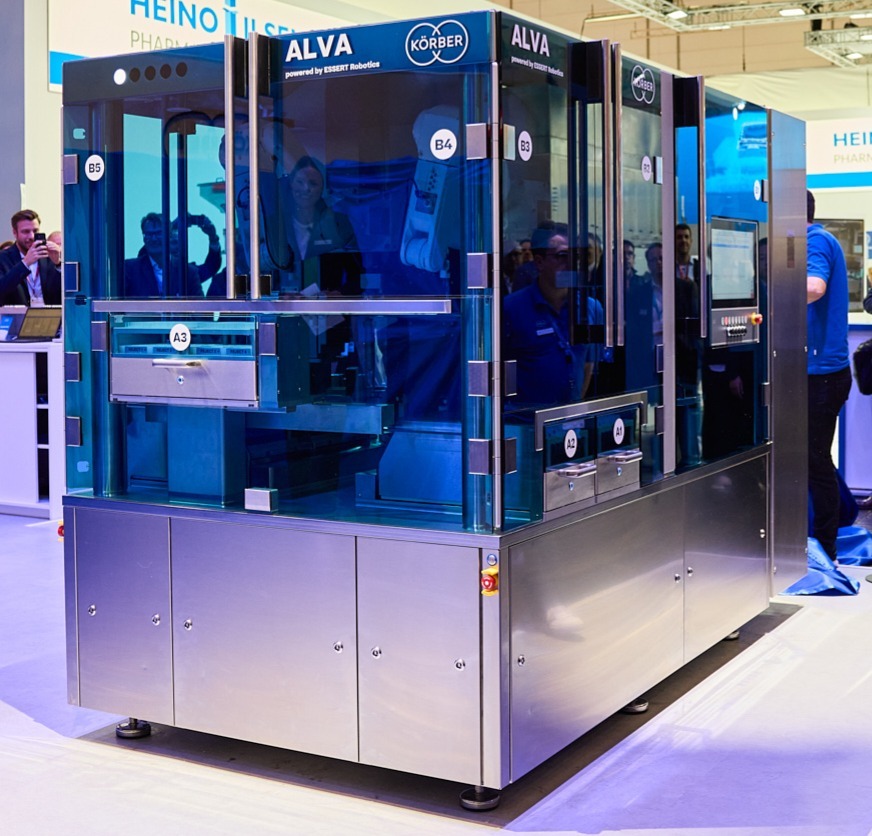
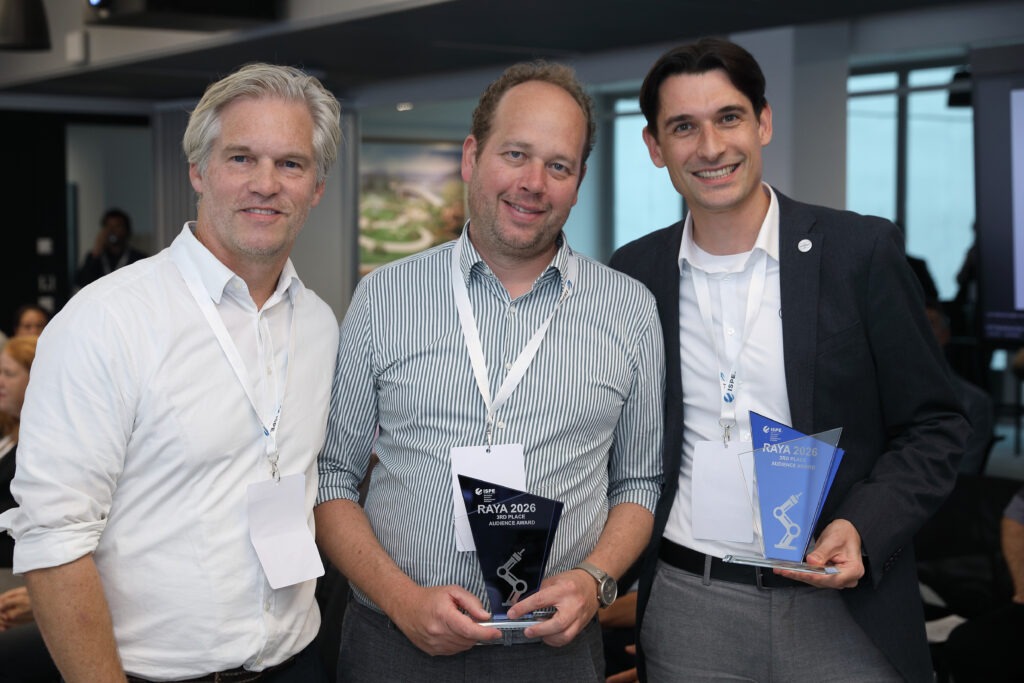
Third place went to ALVA – Adaptive Low-Volume Automated Inspection from Körber Pharma and ESSERT Robotics.

ALVA applies robotic visual inspection to high-mix, low-volume production involving vials, cartridges and prefilled syringes.

Recipe-driven changeovers reduce the need for format-specific mechanical modifications.

A shared direction for pharmaceutical automation

The RAYA Award 2026 winners address different parts of the pharmaceutical and life-science value chain. Nevertheless, several common directions are visible: fragmented processes are becoming connected, automation is becoming more flexible, and quality information is increasingly integrated with physical material flow.

Artificial intelligence is also developing from an analytical tool into a component of process planning and robotic execution. Defined operating limits, traceability, qualification and safe process integration remain essential.

The winning applications therefore demonstrate more than what robotics and AI can technically achieve. They show how these technologies can be translated into practical value for regulated pharmaceutical environments.

All 2026 RAYA Winners

RAYA Award 2027: The journey continues in Italy

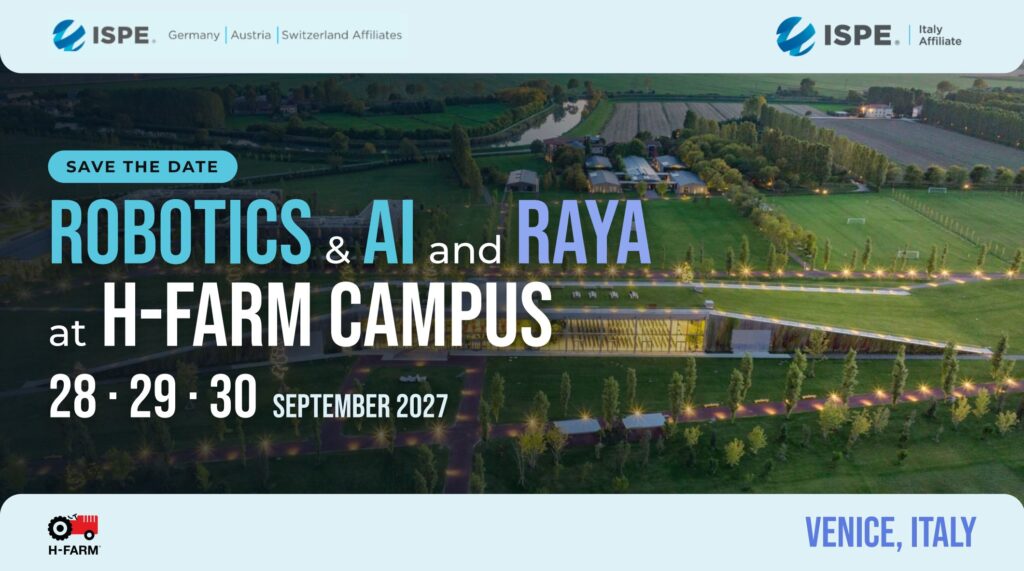
The next RAYA Award will take place at H-FARM Campus in Italy from 28th to 30th September 2027.

The RAYA Award 2027 will continue the ISPE DACH Affiliate’s initiative of bringing together pharmaceutical companies, technology providers, researchers and robotics specialists to present and discuss the next generation of robotic applications.

Save the date and join the pharmaceutical robotics community at H-FARM in 2027.