

RAYA 2026 – Robotics and AI in Pharma in general
- Post author:Jan Hübner
- Post published:October 13, 2026
- Post category:Article / Events / Future Robotics / RAYA / Student Chapter Munich
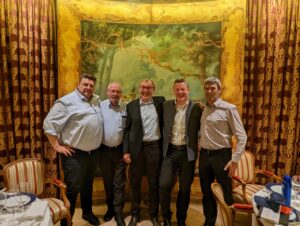
I’m Alperen Gökce, a Master’s student in Industrial Biotechnology at the Technical University of Munich (TUM). From 29 September to 1 October 2026, I attended the 2026 ISPE Robotics & AI and RAYA Conference in Zurich alongside three fellow TUM students. Hosted by Takeda, the event gave us a chance to explore how robotics and AI could fit into everyday pharmaceutical work. The presentations and exhibition offered plenty to discuss, from laboratory tasks to the effort involved in connecting an entire workflow.
What could robotics and AI look like in everyday pharmaceutical work? The conference gave us concrete examples of both, while also showing why it helps to distinguish their roles. AI applications included analysing images of cells and supporting visual inspection for packaging defects and particles. Other examples involved monitoring processes and anticipating equipment problems. These applications showed how much the topic extends beyond chatbots. AI can help interpret the information generated in a laboratory or manufacturing process without necessarily involving a robot.
Robotics brought the physical side into view. We heard about robots handling liquids, preparing samples and moving materials between laboratory stations. Mobile laboratory logistics was particularly interesting because it addressed the challenge of working with an existing laboratory. One system presented in the exhibition could transport products between stations, supporting the workflow without requiring the whole lab to be adapted to a fixed robotic cell. That made the discussion feel close to the practical question of how a laboratory could introduce automation into its current setup.
There were also examples of AI and robotics working together. Presentations described systems in which cameras and sensors provide information, AI supports a decision, and a robot carries out the physical action. An exhibition example explored cleaning pharmaceutical manufacturing components with AI and robotics. AI was used to identify the part requiring cleaning and retrieve the information needed for the task. This gave us a concrete way to picture their relationship. The analysis helps determine what needs to happen, and the robotic system performs the work. It also made clear that combining them should serve a particular task, rather than being a goal in itself.
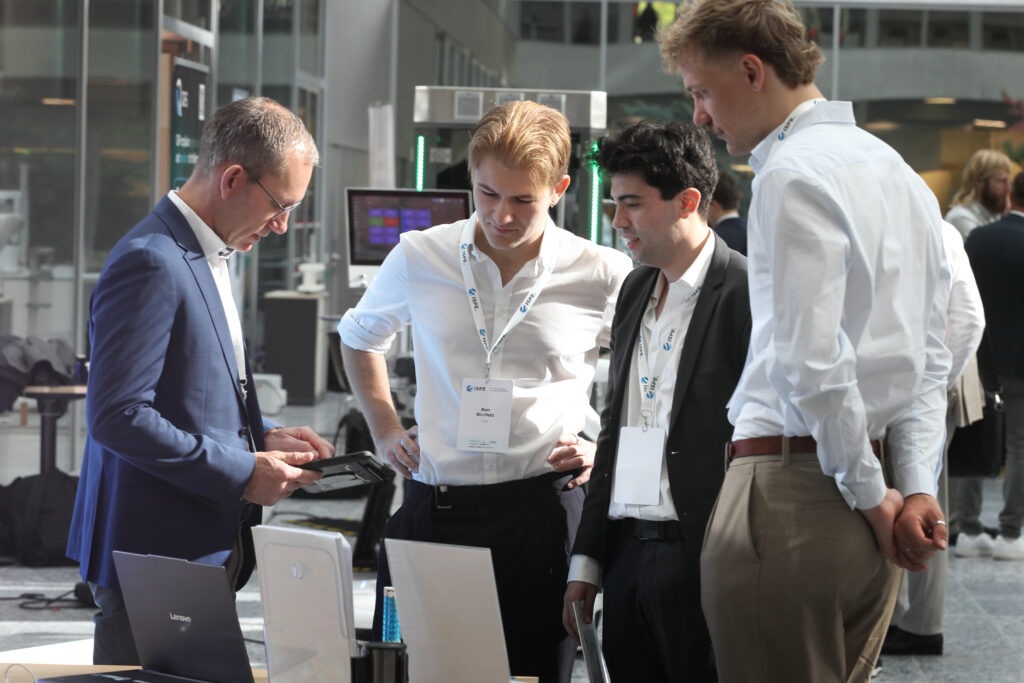
Across several presentations, we heard how much work goes into bringing these applications into everyday operations. Getting a robot to perform a single task is a starting point, but connecting it to the rest of the lab takes careful planning. In one self-driving laboratory, connecting ten software tools was reported as the biggest challenge. That example made the importance of integration especially clear to us. Buying and installing the equipment was only one part of the programme. The software also had to work together.
The same presentation highlighted capturing data and its context during experiments so it could support machine learning. That highlighted another part of making AI useful in everyday work. A connected laboratory needs to consider what happens to the information it produces, as well as how samples move between instruments. Another presentation illustrated how a project beginning with one robot expanded into a programme with five workstreams. Scaling up means thinking about the whole workflow early, bringing different specialists together and agreeing on who is responsible for what.
This was also where organisational questions became hard to ignore. The automated-laboratory presentations described problems arising from separate projects, late integration and unclear responsibilities between suppliers and internal teams. Process knowledge, automation engineering and digital expertise all had a role in making the programme work. For us as students in related fields, this was a useful reminder of how many disciplines meet in pharmaceutical automation. The physical equipment, the software and the people operating them need to be considered together.
People still have an important role in that picture. Whether AI is analysing data or helping guide a robot, speakers emphasised verification and human oversight. They described automation with clear limits, where humans check results and can step in when needed. We also saw different approaches to sharing work between people and robots. The right setup depends on the task and how much human input it needs. Increasing autonomy therefore brought questions about how people remain informed and able to intervene.
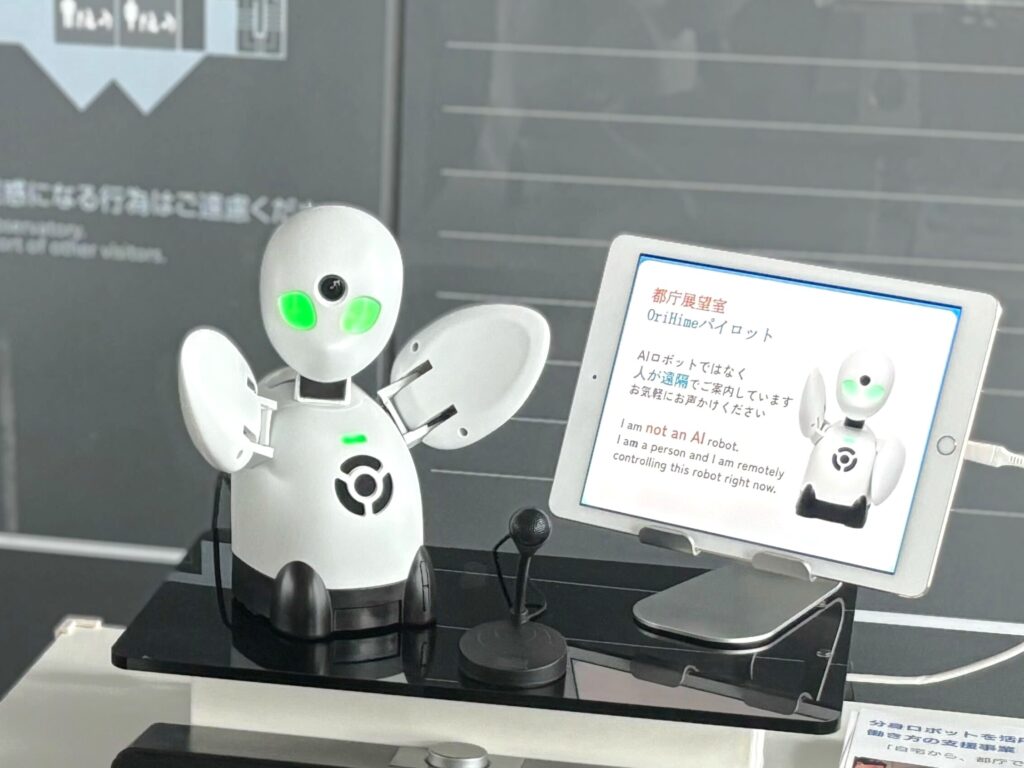
OriHime added another dimension to this discussion. Presented by Takeda in collaboration with OryLab, it enables people with disabilities to participate remotely in social and professional activities. It is operated by a person and does not use AI. The exhibition described how it could help people participate in pharmaceutical workplaces when they cannot be physically present, including after illness or an accident. For us, this widened the discussion from how work gets done to who can participate in it.
It was easy to see the appeal of more consistent work and fewer repetitive or dangerous tasks for people. Laboratory handling and inspection examples illustrated where automation could reduce repetitive workloads, while other presentations discussed hazardous tasks. AI was also described as helping reduce mental load. Putting these ideas into practice still takes investment and the right skills. Speakers highlighted initial costs, integration effort and gaps in expertise as practical challenges that need attention.
For us, a useful takeaway was to look at both the application and the work needed to make it part of everyday operations. AI can contribute through analysis, robotics through physical execution, and some tasks benefit from combining them. The examples that stayed with us made those roles understandable, whether through moving samples around a lab, supporting a cleaning task or enabling someone to participate remotely. As a student, I left with a clearer sense of the questions behind an automation project and of the range of expertise needed to bring it into pharmaceutical practice.