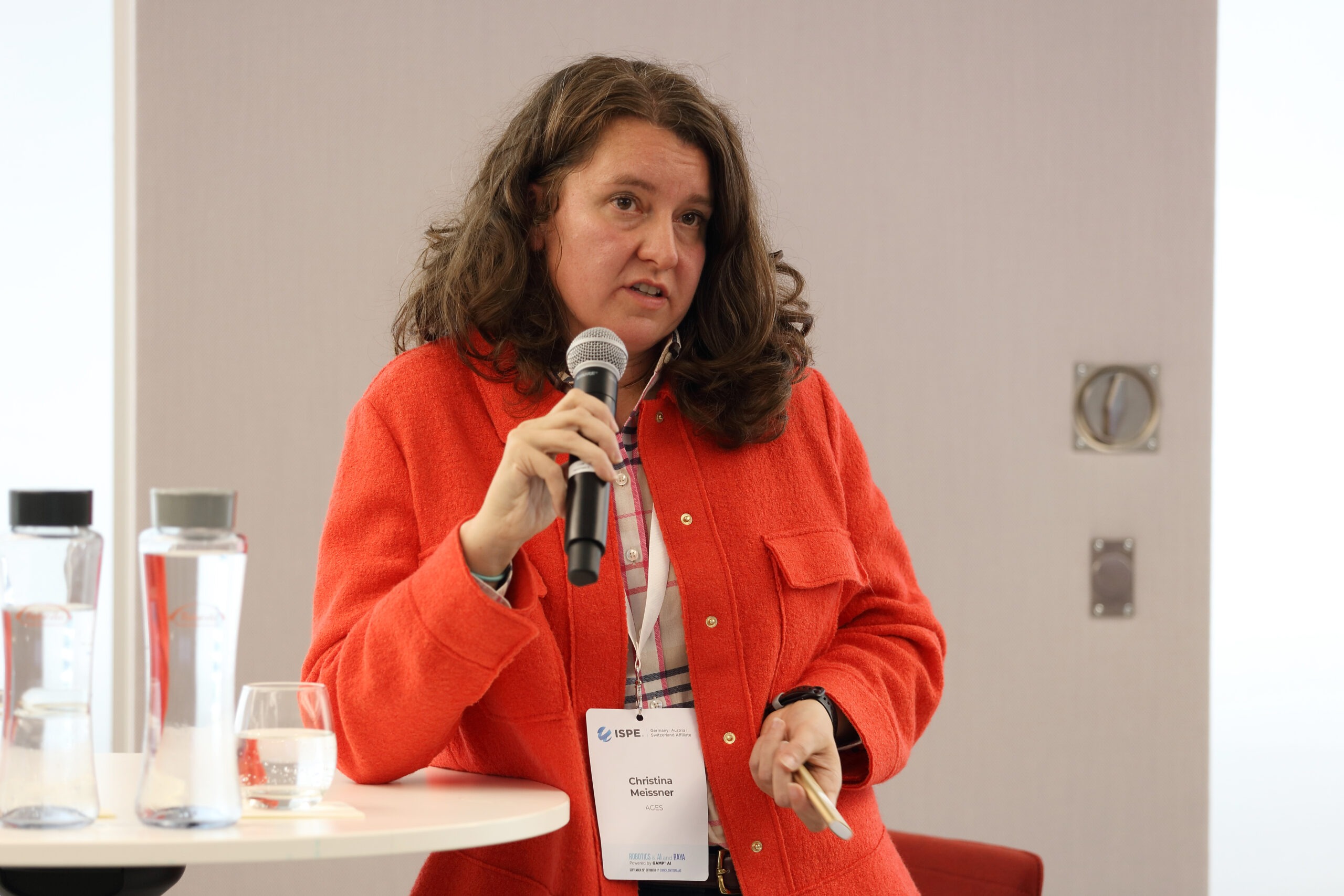

The priority in aseptic manufacturing is keeping the open product clean. In her presentation exploring the intersection of automation and legal requirements, Christina Meissner from AGES highlighted that this critical zone requires strict adherence to a few fundamental rules: relying on the first-air principle where nothing obstructs the filtered air, ensuring zero particle generation, preventing any microbiological growth in Grade A areas, and using highly specialized materials to eliminate contamination risks during transfers or interventions.
Regulatory bodies are actively pushing the industry to adopt better engineering solutions to meet these standards. Looking at the legal requirements from Annex 1 and Annex 2 of the EU guidelines, there is a clear mandate to design facilities and processes that actively minimize contamination. Annex 1 specifically advocates for robotic technology to enhance product protection and assist in detection. Sections 8.9 and 8.16 make it explicit that direct human interaction should be eliminated, and operator incursions minimized through engineering solutions wherever possible, especially in highly sensitive processes like lyophilization. Until now, the approach relied on operators performing interventions through gloves, which must be rigorously classified and assessed. Modern robotic approaches shift this paradigm by utilizing advanced vision systems and automated mechanisms for tasks ranging from vial filling and stopper handling to the routine replacement of monitoring plates.
Replacing a human with a machine is not a simple fix. Justifying the shift to robotics requires demonstrating a measurable reduction in operator presence, Grade A interventions, process variability, and overall contamination risks. The irony of robotic integration is that while it solves several traditional contamination hazards, it introduces completely new vulnerabilities. Mechanical components like joints, bearings, and belts generate non-viable particles that were never an issue with human operators, requiring strict controls like fully enclosed drives. The physical geometry of robots, complete with cables, sensor housings, tool changers, and grippers, creates difficult-to-clean surfaces. These complex shapes risk incomplete disinfection, demanding rigorous hygienic design, custom cleanability studies, and disinfection effectiveness protocols.
Even the fundamental first-air principle is threatened by robotic motion. A robotic arm sweeping across the critical zone can easily disrupt the unidirectional airflow, causing turbulence. Mitigating this requires extensive computational fluid dynamics modeling and further studies on the system’s compliance. Beyond physical disruption, automation introduces systemic risks. Software logic failures, incomplete recipes, and robotic path errors can lead to non-sterile manipulation or even container damage. Sensors and vision systems can suffer from contamination or camera drift, while mechanical wear can introduce lubricants, greases, or hydraulic fluids directly into the product.
A counterintuitive risk is that robots might actually increase human intervention if they are not designed flawlessly. A sensor failure or positioning error that stops a robot dead in its tracks forces an operator to intervene, potentially compromising the aseptic state more severely than a manual process would have, leading to extended downtime. This dynamic feeds into the dangerous psychological trap of false confidence, where operators assume automation guarantees sterility, resulting in reduced vigilance and inadequate aseptic process simulation challenge designs.
Integrating robotics into aseptic manufacturing must be questioned thoroughly. We have to ask exactly which human interventions are actually being eliminated and what quantifiable risk reduction has been achieved. How is the robotic recovery function qualified, and what exactly happens if the system fails mid-process? Was the recovery sequence validated using an aseptic process simulation? The objective is never automation for the sake of automation. It is the rigorous, demonstrable reduction of overall contamination risk.